
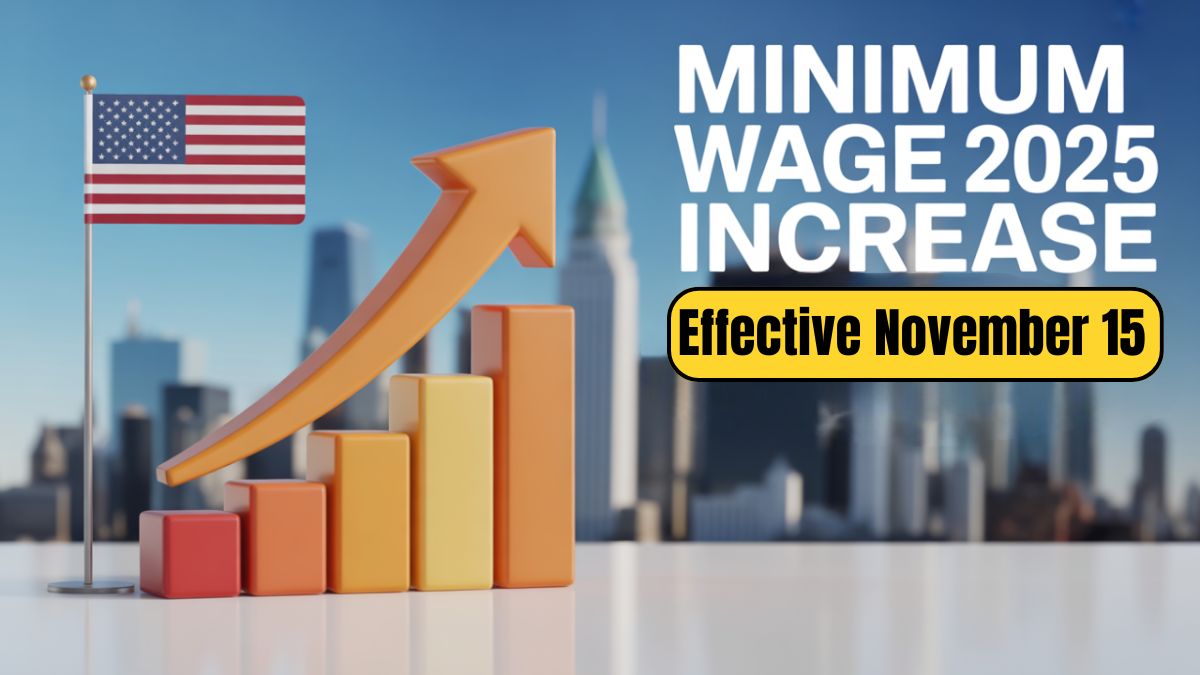
The end of a very long and controversial process finally heralds the day for millions of laboring American workers. On 15 November 2025, the US Federal Government declared that an increase in the minimum wage would take place. This reform is the very first significant wage hike since the year 2009, primarily catering to the needs of those who have been hurt most by inflation and high living costs. According to the experts, this change will not only benefit the workers’ economic condition but also revitalize the overall economy of the United States.
New Wage Rate: A Major Relief for Workers
According to the new ruling, the federal minimum wage will be raised from $7.25 to $9.50 an hour. Besides, the government has outlined a well-defined plan, through which this wage will slowly rise to $15 per hour by 2030. Apart from this, wages will be indexed to inflation as well as productivity, which will guarantee that there will be just and timely wage increases in future.
Analysts opine that the raises would push the monthly income of workers up by about $160, which would be a small but much needed relief for quite a few households hit hardest by inflation.
Federal Wage Increase and Its Economic Impact
Starting from November 15, 2025, this alteration will directly influence the lives of many workers. The government’s wage rise will mean that full-time workers get an extra $2,000 a year. Thus, this supplemental income will be utilized for covering rent, food, healthcare, and other living costs.

The economists argue that the rise in people’s incomes is accompanied by the rise of their purchasing power, which in turn supports small businesses and stimulates economic activity. However, increased labor costs have been highlighted as a problem for small businesses to the extent they might have to cut down their workforce or increase prices for some of their services. To counter these challenges, tax reductions and temporary funds for small businesses are some of the measures that have already been initiated in several states.
Wage rates vary across states: Variations based on local needs
In addition to the federal increase, many states have already increased their minimum wages based on local costs and economic conditions.
- California: $17.50 per hour
- Cities like San Francisco: Over $18
- New York (NYC and Westchester): $17 per hour
- Florida: $14 per hour, target of $15 by 2026
Washington, Oregon, Illinois: Between $14 and $17.25 per hour
The adjustments made emphasize that various regions in the US, in light of the exorbitant cost of living, are already offering salaries that surpass the federal minimum wage. It is expected that the introduction of a multi-tiered pay system will lead to more equitable wage distribution among the workers.
Tipped employees and young workers will receive the greatest benefits
The tipping system in the U.S. has undergone a monumental transformation that impacts workers in the service sector (particularly restaurants and hotels) the most. After a 30-year period, the base salary for tips-receiving staff has gone up from $2.13 to $5.50 an hour. Employers will now have to make up the difference if the total salary including tips is less than $9.50 per hour.
Significant improvements have also been made for young employees.
- Training pay for employees under 20 years of age has been increased from $4.25 to $8.00 per hour.
- After a 90-day training period, all young people will receive the full minimum wage.
- This change will attract more young people to employment and provide better financial security in their early careers.
What do employers need to do before November 15th?
All employers nationwide are required to comply with the new law. The government has directed that businesses update their payroll systems promptly to ensure employees are paid according to the new rates.
Additionally:

- A new wage information poster must be posted at the workplace.
- Accurate records of employee time and pay must be maintained.
- Compliance with all regulations under the Fair Labor Standards Act (FLSA) is mandatory.
- Failure to comply with these regulations may result in fines, garnishment of wages, or legal action. Guidance is available on the U.S. Department of Labor’s Wage and Hour Division website.
Why is the 2025 wage increase important?
The pay rise is a sign not only of an economic advance but also of a revitalization of the working class in the US. During the last few years, millions have lost their economic security due to the stagnation of wages. The pandemic, the inflation and the increasing costs of health care and housing have made the situation even worse. This raise is a glimmer of hope.
Supporters believe it will:
- Increase job satisfaction
- Reduce employee attrition
- Really improve the standard of living
Although opponents warn it could burden small businesses and impact job losses in some sectors, it is widely seen as a necessary step toward modernizing labor policy.
Conclusion
This significant wage hike has imparted optimism to worker class of USA. The 2025 reform is not only a favorable move towards economic growth but also a signal for a very strong and well-balanced work force, where the justice is the ground and the wages are the spreading. The actual effect will be determined by the extent to which governments, businesses, and consumers accept it in the coming years.
FAQs
Q1. When will the new U.S. minimum wage increase come into effect?
A. The updated minimum wage will officially take effect on November 15, 2025.
Q2. What is the new federal minimum wage for 2025?
A. The federal minimum wage will rise from $7.25 to $9.50 per hour.
Q3. Who will benefit most from the 2025 minimum wage increase?
A. Low-income workers, tipped employees, and young workers entering the workforce will benefit the most.
